Compression Therapy in Palm Beach Gardens: Recovery Without the Guesswork
If you have wandered through the recovery area at a marathon expo or a training facility, you have seen the sleeves: long inflatable boots that zip over the legs and pulse rhythmically. That is sequential compression, and it is one of the most approachable services at RINOVA Longevity. A session runs about thirty minutes in a comfortable chair, requires nothing from you, and feels good in an uncomplicated way.
How sequential compression works
The sleeves contain a series of chambers connected to a controller. During a session the chambers inflate one after another, typically starting at the feet and moving upward, hold briefly, then release, and the cycle repeats. Pressure and pattern are adjustable. The design intent is a wave of squeeze that travels along the limb, which is why the sensation is often described as a firm mechanical massage. Arms can be treated with their own sleeves where available; legs are the classic session. Setup and removal take a minute on each end, so the full appointment stays close to the half-hour mark.
What it should feel like
Firm, rhythmic, and oddly relaxing is the usual report. What it should never be: sharp, painful, numbing, or tingling. Say something immediately if it is, because settings can come down and fit can be adjusted. The strongest setting is not the best setting, and a comfortable half hour you repeat weekly beats one you never book again.
Finding your pressure
Expect the first session to be a calibration exercise. The team starts at a moderate setting, asks how the squeeze lands, and adjusts from there; people arrive with genuinely different tolerances, and legs fresh off a marathon week want different treatment than legs fresh off a long flight. Two reference points help as you calibrate. The pressure should always stay on the pleasant side of intense, and your feet and toes should feel normal throughout, not tingly or asleep. Once you find your setting, it becomes your default for future visits, though it is worth revisiting the number now and then as training loads shift through the season.
Built for runners, golfers, and frequent flyers
Compression is an easy fit for how people in Palm Beach Gardens actually live. Distance runners logging summer miles before sunrise, golfers walking thirty-six holes in a weekend, pickleball and tennis regulars, and anyone stepping off a long flight into PBI tends to understand the appeal immediately: legs that have been working or sitting all day get a passive half hour of rhythmic pressure. Sleep, fluids, and sensible training still do the heavy lifting.
Scheduling around training is mostly common sense: many guests like the sleeves in the evening after a hard morning session or the day after a race, and travel recovery works best within a day or two of landing. There is no magic window, and the best slot is the one your week will actually honor.
Safety comes before comfort
Two distinctions matter. First, wellness compression is not the same as medically prescribed compression, whether that means garments for a vein condition or pneumatic devices ordered as part of clinical care. If a clinician has prescribed compression, follow their plan and ask them before substituting anything. Second, some leg symptoms are medical until proven otherwise: swelling or pain that is new, one-sided, red, or warm should be evaluated promptly rather than squeezed, because those can be signs of a blood clot. MedlinePlus has a straightforward overview of deep vein thrombosis covering the warning signs. Beyond that, tell the team about any history of clots, circulation problems, heart or kidney conditions, active infection, recent surgery, or pregnancy before a first session.
Compression or the lymphatic suit?
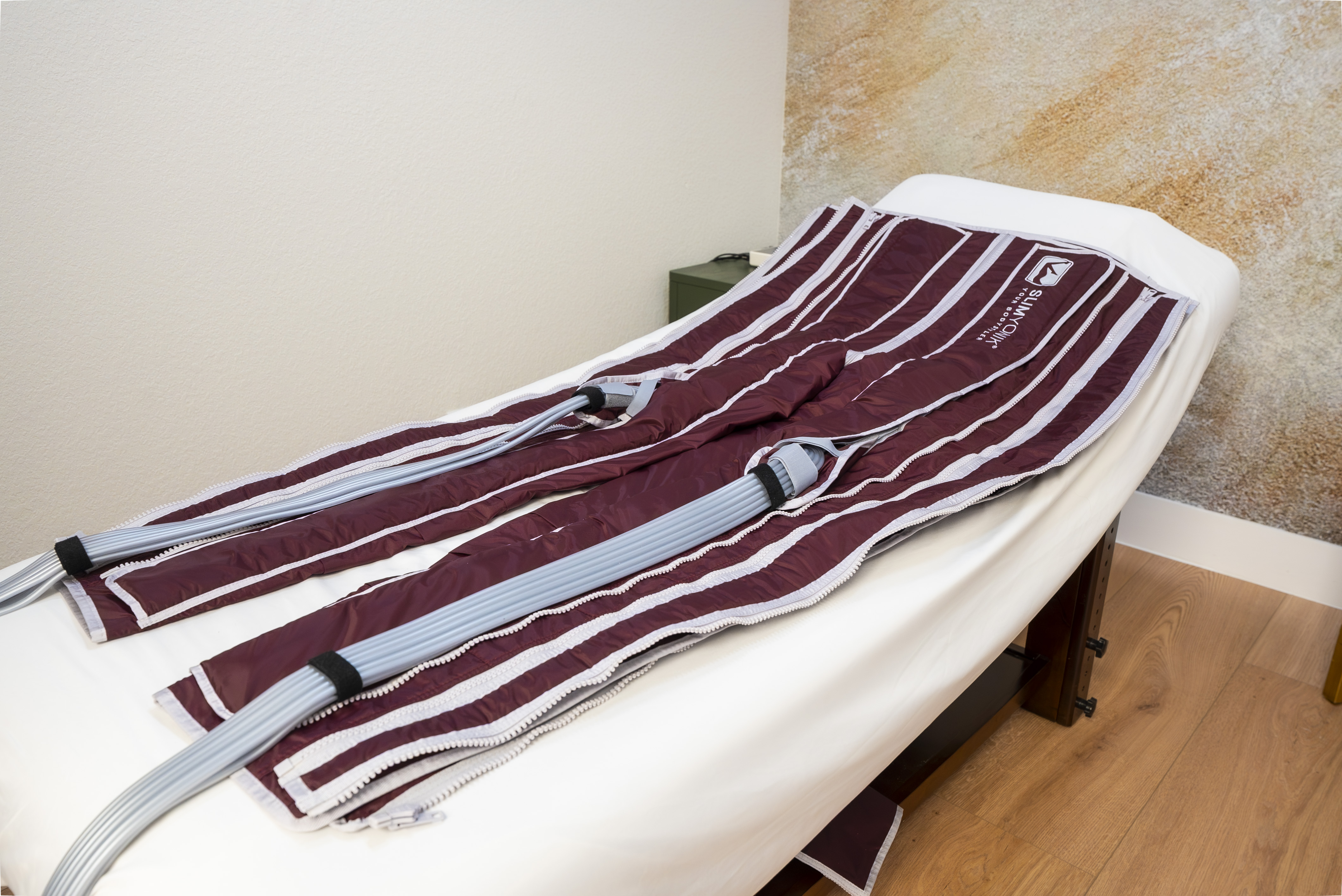
RINOVA also offers Lymphatic Drainage through a full-body suit, and guests reasonably ask which to choose. The short version: compression sleeves focus the wave on legs or arms and are the natural pick for training and travel legs, while the suit covers more of the body for a fuller decompression session. Preference matters as much as theory here, and trying each once tells you more than any comparison paragraph. Guests who fly monthly often end up alternating the two, sleeves after runs and the suit after flights, which is a perfectly sensible way to let each do its best work.
Making it a routine
Judge a first session on three things: whether the pressure stayed comfortable, how your legs felt that evening, and how easily the visit fit your day. Those three answers predict whether the habit will survive. Book through the first-visit request, mention anything from the safety list, and ask about pairing Compression Therapy with Cryotherapy or red light if you want a fuller recovery hour. If the sleeves become a fixture after training weeks, membership options tend to price better than one-off visits. A pattern worth copying from regulars: tie the visit to a fixed weekly trigger, like the long run or the Friday flight home, rather than deciding fresh each week. Recovery habits survive on defaults, not willpower.
Clinical note
This article is for educational purposes only and is not medical advice. RINOVA's clinical team can help you decide whether a treatment is appropriate for your goals, health history, and care plan.